

Prepainted metal is all around us. You are probably familiar with its many uses in the building and construction and appliance markets, but you may not be aware that prepainted metal is also important in the transportation sector.
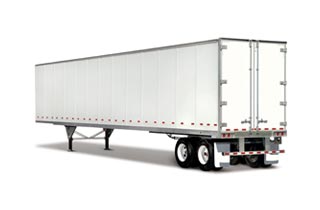
Think “transportation,” and your mind typically leaps to cars and trucks—and from there to the beautiful body panels that are an aesthetically important part of these vehicles. Spoiler alert: Painted automotive body panels require specialized coatings and application techniques and, as a result, are not ideally suited to the use of prepainted metal. Nonetheless, there are plenty examples of coil-processed material used in the transportation sector.
Continue reading

 I know you had a 30-year warranty, but—after 15 years—those shingles simply must be replaced. Anyone can call a roofer, but why not take a shot at making your own shingles? But first you need a formulation—the recipe—and I’ve got just the one for you. And while we’re at it, let’s compare shingle manufacturing to metal roofing manufacturing.
 Sometimes your doctor writes a prescription for your ailment, and sometimes your doctor wants to run some tests first. The first example is a prescriptive approach (do this and you will be okay), whereas the second example is a performance-based approach to solving your problem (take some meaningful measurements and then determine what to do). The same two options are also used in the metal building industry.
 About 75% of the North American coil coating industry is dedicated to building products. Since the lifetime of these products is measured in decades, as opposed to merely years, the weathering performance of the coatings used for this market is critical. Understanding how coatings perform, therefore, is essential. There are many approaches to studying weathering performance, and one of the more interesting techniques to accelerate the weathering process involves the devices described in these two ASTM standards:
 As an association, the
 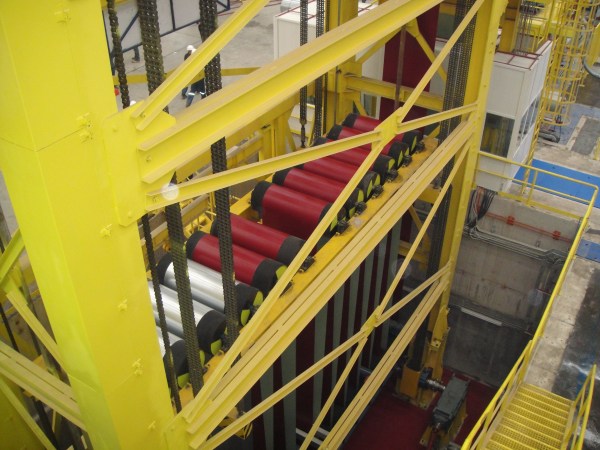 It goes by many names: prepainted metal, coil coated metal, prefinished metal. Each of these descriptions refers to the product of a coil coating line, sometimes called a continuous coil line (CCL). Prepainted metal is commonly used as a coated product in construction applications (metal walls and roofs are two examples), as well as appliances, HVAC units (air conditioners, furnaces, etc.), rainware products (gutters, downspouts, flashing, etc.), and many others. Prepainted metal is the product; a CCL is the application process used to produce prepainted metal.
 When you look at a piece of prepainted metal, what do you see? Certainly a colorful article that may or may not have some shape to it. Often the metal is fabricated with “ribs” to add structural strength to the panel, or it may be flat, as is the case with a metal composite material (MCM) panel. The surface of the prepainted article might be a smooth, homogeneous surface, or it may have a wood-grained pattern, or it might have a subtle pebbly texture. The color of prepainted metal ranges from whites, grays, and blacks to neutral earth tones to saturated, brilliant colors. Some of the colors have metallic or color-shifting effects. But this layer of color is only what you actually see. What you don’t see is all that is under the surface.
  COAT NOTES