


We begin with two strange words, which in some ways are opposites—and in other ways are similar.
Welcome to the fascinating world of wetting.
First, let’s keep this simple. Let’s only think about water—as opposed to oily materials—that is deposited onto coatings, windows, mirrors, the leaves of plants, etc. The water (in the form of rain, steam, fog, etc.) may form droplets on the surface, or it may spread into a thin film. A hydrophobic substrate causes the water to form droplets; a hydrophilic coating, however, causes the water to spread into a thin film. But how do you keep these two terms straight, given that they sound so similar? Continue reading
 Announcer: There is nothing wrong with your television set. Do not attempt to adjust the picture. We are controlling transmission. We will control the horizontal. We will control the vertical. We can change the focus to a soft blur or sharpen it to crystal clarity. For the next hour, sit quietly, and we will control all that you see and hear. We repeat: there is nothing wrong with your television set. You are about to participate in a great adventure.
 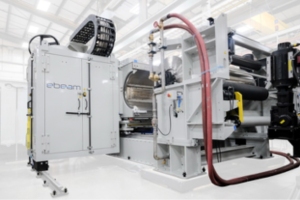 Whatever happened to UV-EB (ultraviolet-electron beam) cured coatings technology? The simple answer is, “Still there. Doing just fine.” For the coil coating industry, the answer is even simpler: Never left the starting block, even though a great deal of effort went into the development of UV-EB coating technology suitable for the coil-coated building products industry. I’ll get to those developments in a bit, but first, a little history.
 Rinse the surface with water.
 It’s the 2016 Nobel Prize season, and there’s a prize for:
 COAT NOTES