

Quantifying the color of an object, and then measuring color difference between the object’s color and a color standard, is an important factor in assuring color consistency and acceptance. Assembling parts from various lots and production runs requires that parts have minimal—or no—color difference, so a typical observer sees nothing objectionable.
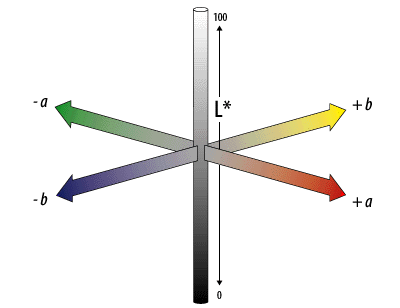
Typically, a color instrument will deliver color values represented by three color coordinates:
- “L” value, which describes the lightness or darkness of a sample
- “a” value, which describes the redness or greenness of a sample
- “b” value, which describes the yellowness or blueness of a sample
 NCCA has been investigating an alternative method for color measurement for the coil coating industry. As part of this investigation, NCCA is coordinating a visual assessment experiment. In a nutshell, we are attempting to assess the human response to slight color differences between pairs of panels and to correlate that response to a color instrument’s reading. Of course, people see color and color differences differently, and color instruments have a host of setup options from which to choose, so this is hardly a straightforward experiment. But if it were simple, it would have been done decades ago.
  COAT NOTES