

Quantifying the color of an object, and then measuring color difference between the object’s color and a color standard, is an important factor in assuring color consistency and acceptance. Assembling parts from various lots and production runs requires that parts have minimal—or no—color difference, so a typical observer sees nothing objectionable.
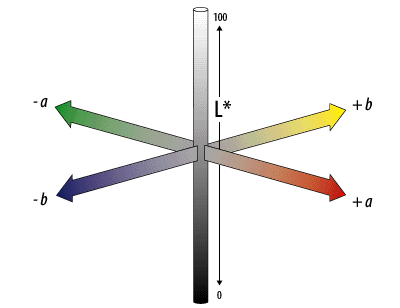
Typically, a color instrument will deliver color values represented by three color coordinates:
- “L” value, which describes the lightness or darkness of a sample
- “a” value, which describes the redness or greenness of a sample
- “b” value, which describes the yellowness or blueness of a sample
 You may think that that standards development in ASTM is a slow process—as it tends to be in most associations with volunteers. You may think ASTM-ers talk endlessly about the stickiness of tape or the problem with the precision of the pencil hardness test. Yes, there is plenty of that. There is also the development of new standards when new technology becomes established.
 COAT NOTES